Access With AI Can Become Competency
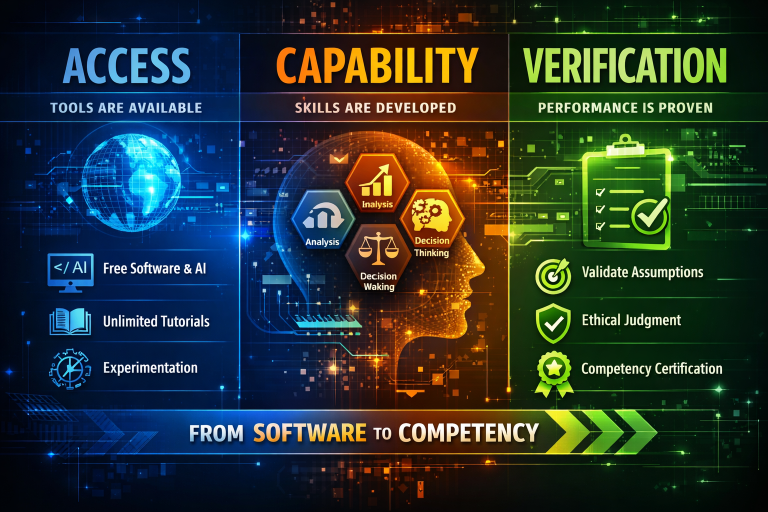
Fig. 1 Generated with ChatGPT version 5.3
- The Illusion of Access in Statistical Education
For years, access to statistical software has been treated as a privilege.
Licenses are restricted.
Platforms are locked behind institutional walls.
Students are told that “real analysis” happens only inside expensive tools.
This created a system where:
- Access = power
- Restriction = control
- Certification = gatekeeping
But something fundamental has changed.
Artificial intelligence now exists in the hands of every learner.
And that changes everything.
- AI Has Broken the Monopoly on Tools
With free and accessible tools such as GeoGebra, R, and Python, combined with AI assistance, learners no longer need permission to explore statistical thinking.
They can:
- Run regressions
- Perform hypothesis testing
- Build DOE models
- Simulate distributions
- Validate assumptions
All without institutional barriers.
But here is the uncomfortable truth:
Access alone does not create competency.
- The New Divide: Access vs Capability
We are no longer divided by who has tools.
We are divided by who can use them correctly.
A learner with:
- Free software
- AI assistance
- Unlimited tutorials
…can still produce completely wrong conclusions.
Why?
Because statistical analysis is not about clicking buttons.
It is about:
- Understanding assumptions
- Interpreting signal vs noise
- Validating models
- Making decisions under uncertainty
- The Dangerous Shortcut: AI Without Understanding
AI can generate:
- Code
- Outputs
- Graphs
- Even interpretations
But AI does not guarantee correctness.
A regression model suggested by AI can be:
- Mis-specified
- Violating assumptions
- Based on biased or incomplete data
A DOE design can be:
- Statistically invalid
- Confounded
- Misinterpreted
AI accelerates output. It does not verify capability.
- Free Access Changes the Game if Used Correctly
When statistical tools become accessible, something powerful happens:
Experimentation increases.
Learners can:
- Try multiple models
- Compare outcomes
- Fail safely
- Iterate faster
This is exactly what capability requires:
- Repetition
- Reflection
- Correction
In traditional systems, limited access meant:
- Fewer attempts
- Higher fear of failure
- Surface-level understanding
Free access removes these constraints.
- From Tool Access to Capability Development (BCI™ Perspective)
Within the BITSPEC Capability Index (BCI™), access to software primarily affects:
- Knowledge (K): Exposure to tools
- Application (A): Ability to execute analysis
But true competency requires progression into:
- Analytical Depth (D): Understanding why results occur
- System Impact (S): Translating results into decisions
- Ethical Judgment (E): Recognizing misuse, bias, and risk
Most learners stop too early.
They operate at:
“I ran the analysis.”
Instead of:
“I understand what the analysis means, its limitations, and its impact.”
- The Role of AI in Accelerating Competency
Used correctly, AI becomes a capability amplifier.
It can:
- Explain statistical concepts in real time
- Validate assumptions step-by-step
- Suggest alternative models
- Detect inconsistencies
- Challenge incorrect reasoning
But only if the learner engages critically.
Otherwise, AI becomes: A generator of confident mistakes.
- The Real Barrier Was Never Cost
The industry often argues that software is expensive.
But the real barrier has always been:
- Lack of structured thinking
- Weak statistical foundations
- No verification of understanding
- Over-reliance on tools
Now that free tools and AI exist, this excuse disappears.
What remains is more uncomfortable:
Competency cannot be purchased.
- The Risk of Sales-Driven Access Control
When access to tools is controlled by sales strategies:
- Artificial scarcity is created
- Learning opportunities are restricted
- Capability development is delayed
Worse:
These decisions are not made based on education. They are made based on profit.
This leads to:
- Division
- Non-representation
- Unequal capability development
A salesperson deciding who gets access to analytical tools is not neutral.
It is a structural decision that shapes who becomes capable.
- From Access to Verified Capability
The future is not more tools or more licenses.
The future is:
Verification.
We must move from:
“Who has access?”
To:
“Who can demonstrate capability?”
Because:
- Running a test is not a capability
- Producing a graph is not a capability
- Using AI is not a capability
Capability is verified performance under conditions of uncertainty.
- Alignment with UNESCO Media and Information Literacy (MIL)
UNESCO Media and Information Literacy (MIL) establishes a global framework for how individuals access, evaluate, and responsibly use information.
Within this framework:
- Access enables participation in knowledge systems
- Evaluation enables critical understanding
- Creation enables responsible contribution
However, while MIL builds awareness and critical thinking, it does not fully address whether individuals can demonstrate capability in practice.
This is where the BITSPEC model extends MIL into Education 6.0.
In the BITSPEC framework:
- Access remains the entry point (tools, software, AI)
- Capability becomes the developmental process (analysis, interpretation, decision-making)
- Verification becomes the mechanism of trust (demonstrated, measurable performance)
This alignment can be expressed clearly:
- MIL Access → BITSPEC Access
- MIL Evaluation → BITSPEC Capability
- MIL Creation → BITSPEC Verification (with accountability and performance evidence)
UNESCO MIL develops informed individuals.
BITSPEC develops capable and verifiable professionals.
This distinction is critical in a world where AI accelerates access and output, but does not guarantee correctness.
Without verification, even well-informed individuals can produce incorrect or misleading conclusions.
With verification, capability becomes observable, measurable, and trustworthy.
Position Statement
BITSPEC operationalizes UNESCO Media and Information Literacy by transforming access and critical evaluation into verified professional capability. In this model, access enables participation, capability enables performance, and verification establishes trust.
- Final Reflection
Access creates participation.
AI accelerates exploration.
Capability creates performance.
Verification creates trust.
The future of education is not access alone.
It is access aligned with capability.
- BITSPEC Position Statement
Free access to statistical software, combined with AI, is one of the most powerful educational shifts of our time.
But without structured capability development, it risks creating:
A world full of analysis and very little understanding.
An article blog written with ChatGPT version. 5.3 support April 15, 2026