The Accountability Gap in Modern Education and Certification
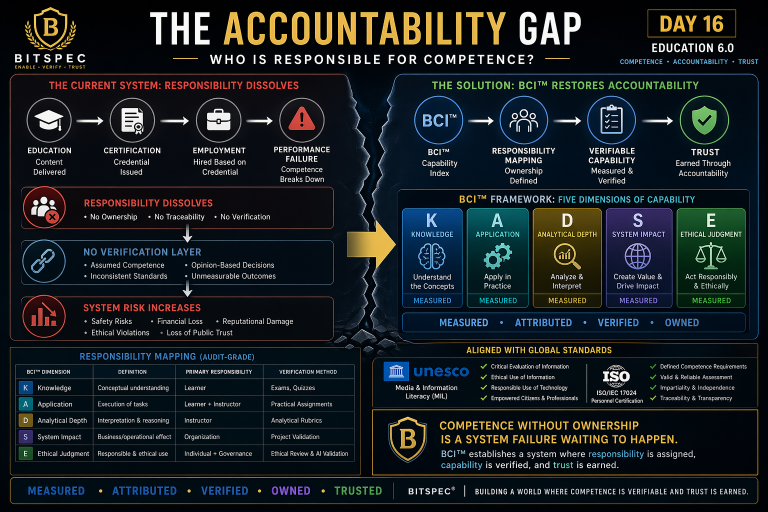
Fig. 1 Generated with ChaGPT version 5.3
1. Introduction: The Question No One Answers
In modern education and professional certification systems, competence is expected, but rarely owned.
Learners complete courses.
Institutions deliver content.
Certification bodies issue credentials.
Organizations hire based on those credentials.
And yet, when performance fails in real-world conditions, a fundamental question emerges:
Who is responsible for competence?
The absence of a clear answer reveals a systemic flaw, one that cannot be resolved through more content, more testing, or more credentials.
It is a failure of accountability architecture.
2. The Illusion of Distributed Responsibility
Today’s systems operate under a model of shared responsibility:
- Educators claim: “We provided the knowledge.”
- Certification bodies claim: “The candidate passed the exam.”
- Organizations claim: “We hired a certified professional.”
- Individuals claim: “I completed the required training.”
This distribution creates the appearance of completeness.
In reality, it produces diffusion of accountability.
Unlike engineering systems, where failure can be traced to design, material, or process, educational and certification systems lack traceability of competence.
Responsibility exists everywhere, and therefore nowhere.
3. The Four Broken Responsibility Models
3.1 Education Without Accountability
Education systems often measure knowledge exposure, not capability development.
Completion becomes the proxy for competence.
3.2 Certification Without Verification
Certification frequently validates exam performance, not real-world execution.
Passing becomes the proxy for readiness.
3.3 Industry Without Validation
Organizations rely on credentials without verifying applied competence.
Hiring becomes the proxy for capability.
3.4 Individuals Without Ownership
Learners assume that completion equals competence.
Participation becomes the proxy for performance.
4. The Missing Layer: Verifiable Responsibility
What is absent is not effort; it is verification linked to responsibility.
Responsibility without verification is opinion.
To establish accountability, competence must be:
- Observable
- Measurable
- Attributable
- Verifiable
Without these elements, systems cannot distinguish between:
- Apparent competence
- Demonstrated capability
5. The Impact of AI on Responsibility
The integration of artificial intelligence introduces a new dimension:
- AI can generate outputs without human understanding
- AI can amplify apparent competence
- AI can obscure authorship and responsibility
This creates a critical question:
If AI contributes to the output, who owns the competence?
This is where the ethical dimension becomes central.
Aligned with the UNESCO Media and Information Literacy Alliance, competence must include:
- Responsible use of information
- Critical evaluation of sources
- Ethical application of tools
AI does not eliminate responsibility.
It intensifies the need to define it clearly.
6. BCI™ as a Governance Model for Competence
The BITSPEC Capability Index (BCI™) introduces a structured model that restores accountability by design.
BCI™ Framework
Capability is defined as:
Capability = Knowledge × Application × Analytical Depth × System Impact × Ethical Judgment
Each dimension represents a distinct and measurable responsibility.
7. Responsibility Mapping (Audit-Grade Structure)
BCI™ Dimension |
Definition |
Primary Responsibility |
Verification Method |
|
Knowledge (K) |
Conceptual understanding |
Learner |
Controlled assessment (quizzes, exams) |
|
Application (A) |
Execution of tasks |
Learner + Instructor |
Practical assignments |
|
Analytical Depth (D) |
Interpretation and reasoning |
Instructor |
Analytical evaluation (rubrics) |
|
System Impact (S) |
Business/operational effect |
Organization |
Project-based validation |
|
Ethical Judgment (E) |
Responsible and ethical use |
Individual + Governance |
Ethical review, AI usage validation |
8. Alignment with ISO/IEC 17024
The BCI™ model supports principles aligned with ISO/IEC 17024:
- Defined competence requirements → BCI™ dimensions
- Valid and reliable assessment methods → structured evaluation (K, A, D, S, E)
- Separation of training and certification decisions → governance structure
- Impartiality and traceability → evidence-based verification
BCI™ transforms certification from:
- Outcome-based (pass/fail)
to - Capability-based (measured, attributed, verified)
9. From Certification to Accountability
Traditional certification answers:
“Did the candidate pass?”
A capability-based system must answer:
“Who is responsible for each dimension of competence—and how is it verified?”
This shift introduces:
- Traceability
- Ownership
- System integrity
10. The BITSPEC Position
BITSPEC defines competence as a governed system rather than an assumed outcome.
Competence must be:
- Measured
- Attributed
- Verified
- Owned
Without ownership, there is no accountability.
Without accountability, there is no trust.
11. Conclusion: Restoring Trust Through Responsibility
The future of education and certification is not defined by access, content, or credentials.
It is defined by accountability.
If no one is responsible for competence, everyone is responsible for failure.
BCI™ establishes a system where:
- Responsibility is assigned
- Capability is verified
- Trust is earned
An article blog written with ChatGPT version. 5.3 support April 21, 2026