
Bitspec
Day 17: When Equal Access Produces Unequal Capability
Why access is not the same as competence and why systems must stop pretending it is.
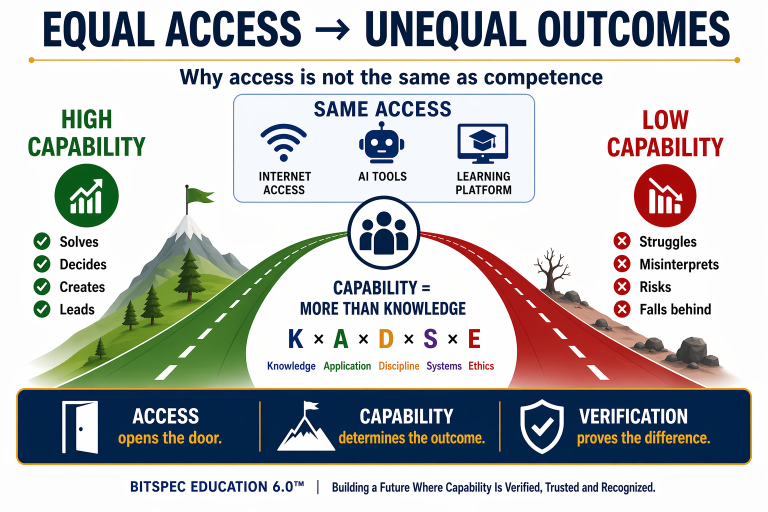
Fig. 1 Generated with ChaGPT version 5.3
1. The Dangerous Assumption
Across education, industry, and institutional systems, one assumption continues to shape decisions, policies, and investments:
If everyone has access, then everyone has an equal opportunity to perform.
This assumption appears logical. It is also fundamentally incorrect.
Because in practice, equal access does not produce equal outcomes.
It produces unequal capability.
Providing identical tools, platforms, and content does not ensure that individuals will achieve the same level of performance. Yet most systems continue to operate as if it is not important.
2. Access Is Binary. Capability Is Multiplicative.
Access is straightforward.
You either have it or you do not.
- Internet access
- AI tools
- Learning platforms
These are binary conditions.
Capability is not.
Capability is constructed, not granted. It emerges from the interaction of multiple dimensions that must all be present and functioning.
At BITSPEC, this is defined through the BCI™ (BITSPEC Capability Index):
Capability = Knowledge × Application × Analytical Depth × System Impact × Ethical Judgment
This structure is critical.
Even if two individuals possess the same knowledge, differences in:
- Application (what they can do)
- Analytical depth (how they think)
- System impact (what they influence)
- Ethical judgment (how they decide and act)
will produce exponentially different outcomes.
3. Same Access. Different Outcomes.
Consider two individuals operating under identical conditions:
- Same internet access
- Same AI tools
- Same learning platform
- Same course content
- Same certification pathway
From a system perspective, they are “equal.”
From a performance perspective, they are not.
One individual:
- Solves complex problems
- Makes sound decisions
- Creates measurable value
- Leads with impact
The other:
- Struggles with real tasks
- Misinterprets information
- Introduces risk
- Falls behind
The difference is not access.
The difference is in capability.
4. Where Systems Fail
Most systems are not designed to detect this difference.
They are designed to track participation—not performance.
They:
- Reward enrollment instead of mastery
- Reward completion instead of competence
- Issue certificates instead of evidence
- Measure activity instead of capability
- Assume exposure leads to expertise
This creates a structural distortion.
Systems validate presence, not performance.
The result is a widening gap between what is claimed and what is real.
This is not a minor inefficiency.
It is a systemic failure that directly impacts:
- Organizational trust
- Operational safety
- Decision quality
- Professional credibility
5. The Reality We Must Accept
Access is necessary.
It opens the door.
But it does not determine:
- What an individual can solve
- What they can build
- What they can sustain
- What can they lead to
Capability determines all of these.
Equal access is a starting condition.
It is not a guarantee of performance.
6. The Role of Verification
If capability varies—even when access is equal—then one question becomes unavoidable:
How is capability proven?
Not assumed.
Not implied.
Not inferred from completion.
Proven.
Without verification:
- Capability cannot be trusted
- Certification cannot be validated
- Systems cannot ensure performance
This is where most education and certification models break down.
They stop at delivery.
They stop at testing.
They stop at certification.
They do not reach verification.
7. BITSPEC Position: From Access to Verified Capability
BITSPEC Education 6.0™ is built on a different premise.
Access is the beginning, not the outcome.
Knowledge is necessary but not sufficient.
Certification is meaningful only if it is supported by evidence.
The model requires:
- Demonstrated application
- Measurable analytical depth
- Observable system impact
- Verified ethical judgment
All integrated through the BCI™ framework and operationalized through structured assessment, evidence-based evaluation, and system-level validation.
This approach aligns with the intent of ISO/IEC 17024, which requires competence to be defined and assessed, and with the principles of UNESCO Media and Information Literacy Alliance, which emphasize critical interpretation, responsible use of information, and ethical engagement.
BITSPEC extends these by making capability measurable, verifiable, and auditable.
8. Final Reflection
The future of education, certification, and professional trust will not be determined by access.
It will be determined by demonstrated and verified capability.
Access opens the door.
Capability determines the outcome.
Verification proves the difference.
An article blog written with ChatGPT version. 5.3 support April 22, 2026
When you subscribe to the blog, we will send you an e-mail when there are new updates on the site so you wouldn't miss them.
