Reforming Engineering Education, Licensure, and Compensation A UNESCO Media & Information Literacy (MIL)–Aligned Policy Framework

Prepared by: BITSPEC
Framework: UNESCO Media & Information Literacy (MIL)
Policy Scope: Canada | European Union | Global
Domains: Engineering Education, Professional Regulation, Workforce Equity

Executive Context

Engineering programs worldwide evolve rapidly in response to technological change, AI integration, and industry needs. However, professional regulatory frameworks remain largely static, relying on incomplete or outdated academic data. This structural mismatch has led to inconsistent licensure decisions, widening salary disparities, and declining trust in professional institutions.

Simultaneously, significant income gaps between licensed and non-licensed engineers have emerged across Canada, the EU, and global markets—often without proportional differences in responsibility, technical complexity, or public safety risk. Employers increasingly leverage regulatory ambiguity to set compensation arbitrarily, resulting in wage suppression and inequity.

From a UNESCO MIL perspective, this represents a failure of transparency, access to reliable information, and ethical governance.

Core Policy Problem
Information Asymmetry Across the Engineering Ecosystem
  • Education: Rapid curriculum changes are not communicated in accessible, standardized formats.

  • Regulation: Degree equivalency models cannot keep pace with modern, interdisciplinary engineering education.

  • Industry: Salary structures lack transparent linkage to competence, risk, and accountability.

This asymmetry enables misuse of licensure status as an economic gatekeeping tool rather than a public-safety mechanism.

Why This Matters (Canada | EU | Global)
Canada
  • Professional licensure increasingly affects income ceilings rather than safety outcomes.

  • Skilled engineers operate below capability due to regulatory and data bottlenecks.

  • Productivity and innovation suffer.

European Union
  • Cross-border mobility is hindered by incompatible recognition frameworks.

  • Skills-based equivalency remains underutilized despite policy commitments.

Global
  • Engineering talent is unevenly valued.

  • Regulatory opacity exacerbates inequality and workforce instability.

  • Public trust in professional systems declines.

UNESCO MIL Lens

UNESCO MIL calls for:

  • Access to reliable, transparent information

  • Ethical decision-making

  • Accountability of institutions

  • Empowered professionals capable of critical evaluation

The current engineering governance model violates these principles by obscuring how competence, licensure, and compensation decisions are made.

BITSPEC Policy Recommendations
1. Shift to Competency-Based Recognition
  • Move from static degree equivalency to:

    • Demonstrated competencies

    • Project and portfolio evidence

    • Industry-validated outcomes

  • Use AI ethically to support transparent assessment.

2. Separate Public Safety from Wage Control
  • Licensure should define scope of responsibility, not salary ceilings.

  • Introduce multiple, clearly defined professional practice tiers.

3. Establish Transparent Engineering Compensation Frameworks
  • Link pay to:

    • Decision-making authority

    • Systemic and societal risk

    • Ethical and legal accountability

  • Reduce employer-driven salary manipulation.

4. Create a Living Academic–Regulatory Interface
  • Universities publish machine-readable learning outcomes.

  • Regulators access real-time curriculum data.

  • Industry validates applied competence.

Expected Impact
  • Fairer and more transparent engineering compensation

  • Improved alignment between education, regulation, and industry

  • Increased mobility and recognition of engineering talent

  • Strengthened public trust in professional governance

  • Enhanced global engineering productivity


BITSPEC Position

Engineering systems must evolve from opaque, credential-centric models to transparent, competency-based, and ethically governed frameworks.
Reform is not optional—it is essential for economic resilience, social equity, and public trust.

Prepared by BITSPEC

Advancing Quality, Competence, and Media & Information Literacy in Engineering Systems
Aligned with UNESCO MIL | Canada | EU | Global

Continue reading
  358 Hits

Learning together -Global perspective

We are grateful for the opportunities our lives provide to grow, learn, and develop in a peaceful and democratic society.

In Canada and within the broader global community, the principles of UNESCO’s Media and Information Literacy (MIL) framework are essential to strengthening informed citizenship, social cohesion, and trust in evidence-based decision-making.

The ability to critically assess, evaluate, and responsibly use information is fundamental to economic resilience, institutional integrity, and sustainable development.

Our next challenge, one in which everyone can participate, is to integrate Lean Six Sigma with Media and Information Literacy, supported by the responsible, transparent, and ethical use of artificial intelligence. This integration reinforces data-driven improvement while ensuring that technological innovation remains human-centered, inclusive, and accountable.

Through this initiative, BITSPEC affirms its commitment to advancing UNESCO’s global vision while responding to Canada’s unique social, economic, and educational context. By combining process excellence, critical information literacy, and ethical AI, we aim to empower professionals and learners to improve organizations and societies in ways that respect equity, integrity, and shared human values.

Purpose of the Certification

The BITSPEC Lean Six Sigma with AI and MIL Certification develops professionals capable of improving processes responsibly, interpreting data critically, and applying artificial intelligence as a decision-support tool while maintaining ethical judgment and accountability.

Guiding Principles

- Human accountability remains central
- AI is assistive, not authoritative
- Information integrity and transparency are mandatory
- Lifelong learning is expected

Certification Structure

The certification is structured around twelve competency domains aligned with Lean Six Sigma DMAIC, responsible AI use, and UNESCO Media and Information Literacy principles.

Issuing Body

BITSPEC
Member Organization – UNESCO Media and Information Literacy Alliance

We wish you all "Happy Holidays" and stay safe! 

BITSPEC_LSS_AI_MIL_Full_Certification_Guide.docx

The framework will be aligned with Lean Six Sigma and MIL (UNESCO), and several elements that currently exist in CEAB (Canadian Accreditation Board planner).

Frameworkvs.1.docx

Continue reading
  395 Hits

Quality of living


Nature.jpeg

Quality of living refers to the conditions that allow individuals and communities to thrive—physically, mentally, socially, and economically. It is a multi-dimensional concept that integrates health, education, safety, environmental stability, economic opportunities, cultural participation, and access to reliable information. Improving the quality of living is essential not only for individual well-being but also for building strong, resilient, and peaceful societies.

Continue reading
  315 Hits

Deepfakes: The Trust Crisis in the Age of Artificial Intelligence


In December 2025, we face one of the most alarming challenges of artificial intelligence: deepfake technology. We're no longer talking about simple fake images or amusing celebrity videos. Deepfakes have evolved into a sophisticated weapon of corporate fraud, political manipulation, and cybercrime that threatens to undermine society's very ability to distinguish reality from fiction.

The Explosive Scale of the Problem

The numbers are staggering and deeply concerning. The volume of deepfake files distributed online has surged from 500,000 in 2023 to approximately 8 million in 2025. Fraud attempts using this technology increased by 3,000% in 2023, and Deloitte predicts that AI-enabled fraud losses in the United States will reach $40 billion by 2027.

In the second quarter of 2025, 487 deepfake attacks were documented, representing a 41% increase from the previous quarter, with losses of approximately $347 million in just three months. Attacks now occur every five minutes, transforming what seemed like a futuristic concept into a concrete, daily threat.

Cases That Redefine the Threat

One of the most shocking recent examples is the case of engineering firm Arup in Hong Kong. In January 2024, an employee in the finance department participated in a video conference with several colleagues, including the company's chief financial officer from the United Kingdom. The discussion seemed normal, the subject was legitimate - a confidential acquisition - and the participants were familiar. The employee authorized 15 transfers totaling $25.5 million. All participants in the call were deepfakes. Not a single real person had participated in that meeting.

This case demonstrates how sophisticated attacks have become. We're no longer talking about static photographs or videos you can carefully analyze. We're talking about real-time interactions, convincing conversations, precise replication of a person's mannerisms and voice.

The Invisible Victims: Those Who Suffer in Silence

Beyond large-scale corporate fraud, there's a more insidious and personal epidemic. In 2025, the Internet Watch Foundation documented 210 web pages with deepfakes of child sexual abuse in the first half of the year - a 400% increase over the same period in 2024. More alarmingly, 1,286 videos with abusive sexual content were reported, of which 1,006 were so realistic they couldn't be distinguished from images of real children.

Politicians, especially women, have become frequent targets. Over 30 high-profile British female politicians were targeted with sexually explicit deepfake content ahead of the UK general election. In Taiwan, during and after the 2024 presidential election, deepfakes were used to discredit political leaders, fabricating private conversations and even explicit sexual videos to destroy reputations.

Why Are We So Vulnerable?

The fundamental problem with deepfakes isn't just technological - it's profoundly human. Research confirms that humans cannot consistently identify AI-generated voices, often perceiving them as identical to those of real people. The human detection rate for high-quality deepfake videos is only 24.5%.

But our vulnerability goes even deeper. Deepfake attacks exploit our strongest human instincts. When we hear a child's voice in distress, when we see a family member in trouble, we don't stop to authenticate the video source. We react emotionally and impulsively - exactly what attackers are counting on. Even the most security-conscious executives become vulnerable when the attack becomes personal.

There's also a dangerous paradox called the "liar's dividend": in the world of deepfakes, authentic content can be dismissed as fake. This ability to deny authentic recordings creates an impossible situation where neither belief nor disbelief in evidence can be justified.

Solutions and Our Future

Organizations are responding by implementing robust verification protocols and investing in AI-based detection systems. Companies like Reality Defender and Resemble AI are developing technologies that can identify synthetic content, even when it's modified or compressed. The challenge is that detection systems must constantly evolve, as attackers continuously improve their techniques.

From a legislative standpoint, progress is remarkable but uneven. In May 2025, the United States enacted the TAKE IT DOWN Act, the first federal law criminalizing the distribution of non-consensual intimate images, including deepfakes. Denmark proposed an amendment to its copyright law that would give people rights to their own face and voice. California, New York, Texas, and Minnesota have adopted specific laws against deepfakes, especially in electoral and sexual content contexts.

UNESCO emphasizes that education must go beyond simple technical detection, teaching students to navigate truth, knowledge, and AI-mediated uncertainty. We're not just facing a crisis of disinformation, but a crisis of knowing itself - deepfakes don't just introduce lies into the information ecosystem, they erode the mechanisms by which societies construct shared understanding.

Conclusion: A Society That Doesn't Know What's Real Cannot Self-Govern

Deepfakes represent more than a technological challenge - they're an existential threat to social trust, democracy, and our ability to function as a society. In a world where anyone can fake reality at industrial scale, the foundations upon which governance, justice, commerce, and human relationships are based are seriously compromised.

The solution requires coordinated and immediate action: organizations implementing strict verification protocols, technology companies prioritizing the development of adaptive detection systems, governments creating comprehensive legislative frameworks, and citizens educated to think critically about the content they consume.

The ability to detect dangerous AI is no longer optional - it's existential. And the responsibility to preserve trust in the age of deepfakes belongs to all of us.

Continue reading
  373 Hits

Power, Information, and Public Priorities: A Media and Information Literacy Lens on Governance and Economic Narratives

1. Introduction

Financial crises within governments often trigger rapid and politically strategic decision-making. Historical records show that some states have redirected public attention or attempted to stimulate economic activity through conflict. While not universal, these patterns underscore the importance of critically examining how information systems frame political decisions.

Within this context, sectors such as education, healthcare, and peace-promoting infrastructure—core components of human development—risk becoming political tokens negotiated by competing interests rather than sustained long-term investments. This misalignment challenges the principles of transparency, accountability, and equitable access to information.

UNESCO’s Media and Information Literacy (MIL) framework provides a structured approach to interrogate these dynamics by equipping learners and citizens with the competencies to understand, evaluate, and question the narratives shaping public policy.


2. Unequal Access to Economic Support

Large privately owned corporations often secure substantial financial backing from banking institutions during economic downturns, while small and medium-sized enterprises (SMEs) frequently disappear due to lack of access to credit. This disparity suggests structural imbalances in how economic power is distributed and legitimized.

From an MIL standpoint, several questions arise:

  • How are financial rescue decisions framed in media and public communication?

  • Which actors control the flow of information regarding economic priorities?

  • How do dominant narratives elevate certain institutions while marginalizing others?

Analyzing these questions helps learners identify both explicit and implicit biases embedded within economic reporting and political messaging.


3. Information Ecosystems and Democratic Narratives

Countries identifying as democratic often present themselves as transparent and accountable, yet information may be incomplete, selectively framed, or influenced by political and economic stakeholders. Citizens may therefore develop an inaccurate understanding of who drives policy decisions.

MIL encourages reflection on:

  • Sources of political information and the degree of independence they represent

  • Mechanisms of influence—lobbying, financial power, corporate media ownership

  • Public vulnerability to misinformation, selective reporting, and agenda-setting

Understanding these dynamics strengthens civic engagement and supports the development of resilient, informed societies—key UNESCO objectives.


4. Why MIL Matters for Governance and Public Trust

MIL skills enable learners to:

  • Evaluate political and economic claims critically

  • Recognize imbalances in media visibility between large vs. small organizations

  • Understand how crises can reshape public values and priorities

  • Detect misinformation, manipulated narratives, and omitted context

  • Participate meaningfully in policy dialogue as informed stakeholders

Strengthening MIL is therefore central to improving democratic processes, restoring public trust, and promoting evidence-based decision-making.


5. Recommendations (MIL-Framed)
  1. Deepen transparency in public spending and crisis response through accessible, data-driven communication.

  2. Support independent media to diversify the information ecosystem and reduce concentrated influence.

  3. Expand MIL education within all sectors—schools, government institutions, communities, and workplaces.

  4. Promote equitable economic reporting by ensuring small organizations are visible in public discourse.

  5. Encourage participatory dialogue and citizen oversight mechanisms supported by MIL competencies.


Continue reading
  353 Hits

Lean Six Sigma question (Analyze Phase- Green and Black Belt) with AI

Continue reading
  344 Hits

Historical approaches to behavioral Regulation and the modern need for comprehensive cross-cultural Assessment

1. Historical Background: Why reproductive control appeared in human societies

Across history, practices involving the regulation of reproductive capacity appeared for reasons tied to governance, social order, or institutional stability. The motivations were rarely personal; they were usually systemic.

1.1 Administrative Security in Empires

Large empires such as China, Byzantium, and the Ottoman state placed certain male officials in roles where they could not build hereditary lines. The goal was to:

  • Prevent political rivalries
  • Maintain loyalty to the ruling house
  • Reduce conflicts of interest

This was fundamentally an institutional safeguard, not a moral judgment about individuals.

1.2 Religious Symbolism and Renunciation

Some communities used bodily modification to symbolize:

  • Dedication
  • Purity
  • Withdrawal from worldly obligations

These practices were specific to their historical moment and belief systems.

1.3 Early Legal or Penal Frameworks

In certain eras, bodily penalties were used to enforce social order, reflecting the legal standards and moral assumptions of those societies, not modern ethical principles.

1.4 Medical Interpretations Before Modern Science

Before endocrinology and psychiatry, many behaviors were attributed to imbalances or perceived excesses, leading to interventions that today would be considered non-scientific.

2. Transition to Modern Understanding

By the late 19th and 20th centuries, societies recognized some of the importance of:

  • Medical ethics
  • Scientific reasoning

As a result, historical bodily penalties disappeared, replaced by evidence-based medical and psychological assessments.

Today, any discussion of regulating behavior focuses on:

  • Diagnosis
  • Treatment
  • Risk management
  • Rehabilitation
  • Cultural and psychological understanding

This represents a complete shift away from the intentions of ancient societies.

3. Why Modern Societies Emphasize Proper Assessment for Individuals

In contemporary systems—whether related to public safety, healthcare, education, immigration, or employment every individual must be properly assessed, especially if they have lived in a different cultural, legal, or social environment.

This is not because of "inferiority" or "superiority," but because cultures shape norms, expectations, behaviors, and legal boundaries differently.

3.1 Cultural Norms Differ Significantly

Behavior that is acceptable, ignored, or poorly regulated in one society may be strictly monitored or illegal in another.

Examples:

  • Interpersonal boundaries
  • Age of consent
  • Gender norms
  • Family structures
  • Role of authority
  • Views about privacy, autonomy, and personal space

Assessment helps ensure that individuals understand the legal and social expectations of the new society.

3.2 Variation in Education, Legal Knowledge, and Socialization

People raised under different systems may not:

  • Understand local laws in detail
  • Recognize what constitutes inappropriate behavior
  • Be familiar with norms around consent, safety, or professional conduct

Assessment provides an opportunity to identify gaps and provide orientation, therefore, measures that must be taken.

3.3 Trauma, Instability, and Migration Stress

Many individuals coming from environments of:

  • War
  • Poverty
  • Political instability
  • Weak institutional systems

may experience trauma or stress that affects adaptation.

Assessment allows for:

  • Early identification of support needs
  • Mental-health services
  • Prevention of maladaptation or risk behaviors

3.4 Protecting Public Safety and Quality of Life

Modern societies have the responsibility to ensure:

  • Individuals understand local laws
  • Vulnerable populations are protected
  • Communities remain safe and cohesive

This is comparable to how professionals (teachers, healthcare workers, engineers) undergo screening before practicing; it is not a cultural judgment but a quality assurance process applied to everyone.

3.5 Fairness: Assessment is Universal

A key point:
Proper assessment is appropriate for all people, including those born locally.

Many issues, mental health conditions, impulse-control disorders, trauma, or lack of education exist in all populations.
Assessment is not about "othering," it is about ensuring that individuals from diverse backgrounds have the knowledge and support they need to function safely and successfully.

4. Bringing It Together

Historically, societies used bodily control to maintain order because they lacked:

  • Modern medical science
  • Psychological assessment tools
  • Legal protections
  • Human-rights frameworks

Today, the equivalent objective protecting society should be achieved through assessment, education, and ethical medical care, not through physical penalties.

A modern society committed to quality and safety must therefore:

  • Assess individuals' understanding of local norms
  • Provide education where necessary
  • Identify risk factors early

OpenAI. (2023). ChatGPT (Mar 14 version) [Large language model]. https://chat.openai.com/chat
Continue reading
  310 Hits

Difference between non-probability sampling and probability sampling

Criteria to select the proper probability sampling to reduce biases.

Non-probability sampling Probability sampling
Sample selection is based on the subjective judgment of the researcher. The sample is selected at random.
Not everyone has an equal chance to participate.Everyone in the population has an equal chance of getting selected.
The researcher does not consider sampling bias.Used when sampling bias has to be reduced.
The sample does not accurately represent the population.Used to create an accurate sample.
Finding respondents is easy.Finding the right respondents is not easy.
Continue reading
  282 Hits

This is a test

Testing the blog now as the video is uploaded from the drive.


Test

Testing the video

Continue reading
  1774 Hits

Inheritance

Any being has direct ancestors with lineages correlated to the future. The environment is a contributing factor but never the determinant. A high or low level is directly dependent on its origins therefore differences will always exist.


Continue reading
  1937 Hits

Euphoria of wars

The purpose of any war is to decompose, destruct, and remove what was created rather than build and enhance through peace a sustainable life. Human history is that of wars and unrest, interferences of powerful leaders who are always ready to sacrifice everyone else's life. It is the euphoria of wars that we watch being played by those who decide over life and deaths of others.

In a time of war, the creation of art leads to more unrest while moving us toward the nothingness of the universe. It is a universe that belongs to less life and more stones that are lifeless and cold.

Peace does not occur when leaders are supported by those who gain from wars.

Tattoo


Continue reading
  2411 Hits

Our sense of purpose and belonging HM Queen Elizabeth II

History has taught us that rarely humans have reached an agreement; it only happened during the reign of our HM Queen Elizabeth II for the last 70 years.

While visiting Buckingham Palace, photos were not allowed, but among all the paintings, the one I liked the most and located near the throne, where she had the corgies nearby.


She will be missed as our Queen and Head of the State because of her powerful grace and governance stability.


Continue reading
  2661 Hits

Biological life

The human's trial to predict the biological changes led us to today's conflicts because biology has its paths. Human's made tools to predict life and biology have not reached a high level of development. While there is progress in technological development, the current machines can rarely predict biological life even when advanced probabilities, statistics, machine learning, artificial intelligence are applied.

The question that I ask is what mechanisms biological life has that it employs to ensure survival? What we can see so far is that evolution will be different and there will be other changes that will be completely different than past history.

An oppressive biological system will find its new ways to develop, and if there is cause and effect beyond our knowledge and understanding, then the more suppressed a system is, the more determined the life becomes to survive.

Removing all obstacles shall be the goal for New Year 2022.

Education, healthcare, poverty, elimination of discrimination, etc. have been long overdue. Many of us have been asking these questions for many years without seeing a complete change done.


Why not make this New Year 2022 the new standard of quality of life?

Photo by //unsplash.com/@bekirdonmeez?utm_source=unsplash&utm_medium=referral&;utm_content=creditCopyText">Bekir Dönmez on Unsplash

Continue reading
  2784 Hits

Difficulties to create inclusive societies

This report is important as it proves through its data the lack of sustainable actions. Each child has the right to live in an environment where education is available and offered at the highest quality level. Technologies made it possible.

Continue reading
  2907 Hits

Freedom is inherited


Our way of thinking is inherited, the same is freedom and so many other accomplishments and achievements that our predecessors have fought for. The manifestation of a certain control can be observed in many ways through businesses that diminish the individual and can be easily recognized when the desire for quality, respect, preservation of values no longer exist. To change something into chaos is easy, but to ensure quality requires a framework and a state of mind that are complementary. Those who try to isolate themselves from this responsibility and become despots do not understand history as nature has a sublime way of proving its existence.

Continue reading
  2759 Hits

Knowing what online learning transition truly implies


Obviously, as online work slowed down due to the end of this year, there is time now to share some of my experiences that I had. I am sharing some of the books that I read because you will see in this post that most of us play together because we understand each other.

While classes have evolved from in-class to online participation, I observed a Gaussian curve distribution. Students were working on whiteboards and computers before the online transition. At that time, I was able to mix and form the teams based on certain rules. When the classes went online, the main challenges experienced by students aside from the technical aspect of using computers and laptops were the group formation for working together. Most of the assignments during one of the semesters required group work while other assignments required individual work. Students who worked individually seemed more comfortable if they had previous experience working online. Students without any previous experience working online seemed to be more interested to try to work in teams.

Then I asked my nephew who plays computer games as to how he engages online to play games with other teenagers that he has never met or known? He said that he looks for those who are competitive to form a team such that he will ensure the increased chances for success. They have rules that are established at the beginning of the game and they all play by engaging, listening, following each other. They play for fun and that makes the main difference between learning and playing for fun.

Can we then make the learning fun? Yes, we do have many ways to engage through technologies and software/apps. Yet, the question still remains about winning? What do students win when they learn versus when playing for fun? Most students take courses, certificates, etc. for being hired in positions. So, they will gain knowledge and skills, but there are no measures now about know how well will they play in teams since the education system does not measure the playing factor in Assignments, quizzes, tests, performances. We do not measure how well a student performs in teams. The question is why not?

Since companies only exist for as long as they are profitable and have customers to buy their products/services the question is whether Education as a system really delivers on the promises if there are important skills required that have never been taught, verified, measured, improved, etc. during the learning. Yes, we do measure the outcomes as better performance when students work in some teams, but the criteria are quite poorly developed.

What type of changes do we need to make? The societies need to understand where the shortcomings are in the education system, therefore we will need to measure, quantify, qualify the online engagement and performances such that we will have an increased level of transparency as to how well the integration process really happens between generations, among generations, between technologies versus no technologies. We are all in a learning process that has to be transparent while engaged.

Continue reading
  2962 Hits

Reflections at the end of this year 2020

By no other measure, this year 2020 was one of the most extraordinary years as the events across the world have demonstrated the fragility of our system. The result of different interactions with their consequent behaviors led to rather profound transparency about the differences rather than similarities. Since the differences prove that not everything can be transformed as some might understand the changes. Many businesses lost customers and revenues while others strived. Political systems were overturned while others prevailed. Nature changes made everything worse as it shows that without pollutions the natural life gets back on its own tracking system. All the other areas of our lives did expose much larger and deeper differences that are not by an individual choice, but rather a systemic approach to control what is not natural. Artificial Intelligence does follow most of what science has discovered over many centuries yet it is still far from prevention of human exploitation, unfair distribution of wealth and wellbeing etc.

On a more positive note, we would like to send our best wishes to our followers and their families, and let's try to start to make this world a better one for every single being. 

Wishing you health and wellbeing!


Continue reading
  2764 Hits

How far behind the Education, Technologies, and Medicine are?

Why people do not ask for permanent cures to exist when we know so much about nature and its laws?

Continue reading
  2791 Hits

Share SoTL Research Plan

Many years ago, I decided to become a professor and deliver online learning as a way of ensuring that students can learn at their leisure and in the comfort of the home. My original motivation at that time when I started to provide online learning in an asynchronous environment, was rather to understand what was missed in the previous system since there were countries that did not introduce the online learning as one of the options available to all students. The interesting part that I found through my direct experience was that many students were demotivated to learn outside of the traditional school environment because the students had to be persistent, diligent, critical in how they learned etc. Some qualities that I also try to develop during the synchronous classes through the SoTL that I presented in "Plan for a SoTL Project".

What I did not realize at the beginning is the amount of effort that institutions, different Government levels, methodologies, and resources are required to assess and continuously improve the system such that the  Quality of Education prevails. 

As I completed a short plan for SoTL and shared my motivations, the changes are quite evident as we need to take smaller steps if we all want the quality and education standards to meet the OECD mandate. Therefore, the following positive education outcomes would require funds, plans, methodologies, resources:

  • As increased diversity in voice and perspective in the pedagogy leading to stronger institutional values on teaching and learning,
  • Promotion of new networks among members at institutions,
  • Scholarship opportunities in the form of presentations and publications with opportunities for outside funding to support program innovation.

To expand my own professional development, I found that the scientific research I have lately been engaged in does follow the methodology that is a quality cycle of Plan-Do-Check-Act used in general by large and small organizations.

Similarly, the teachers engaged in SoTL projects frame research questions, systematically gather and explore the evidence, reflect on and refine new ideas, craft the results in a form that is suitable for public presentation, and peer review (Cambridge, 2001; Christensen Hughes, 2005). This final step of ‘going public’ is crucial, as it makes the results of individual inquiries available for others to build upon and to learn from, enhancing the wider profession of teaching in the process (Huber & Hutchings, 2005; Hutchings & Shulman, 1999).

When scientific research is performed in education, the results are incommensurable as students become the direct benefactors. Societies benefit when the systematic approaches are well documented and based on data that is shared among all parties that are involved in development.

While the ethical implications have to be considered, the project plan that I proposed can be used without affecting the privacy of any student who would participate.

http://www.heqco.ca/SiteCollectionDocuments/HEQCO%20Researching_Student_Outcomes%20ENG.pdf

http://postsecondaryperformance.ca/Province?sector=C&prov=ON


Photo by Picture on Unsplash


Continue reading
  2164 Hits

Reality of aesthetics


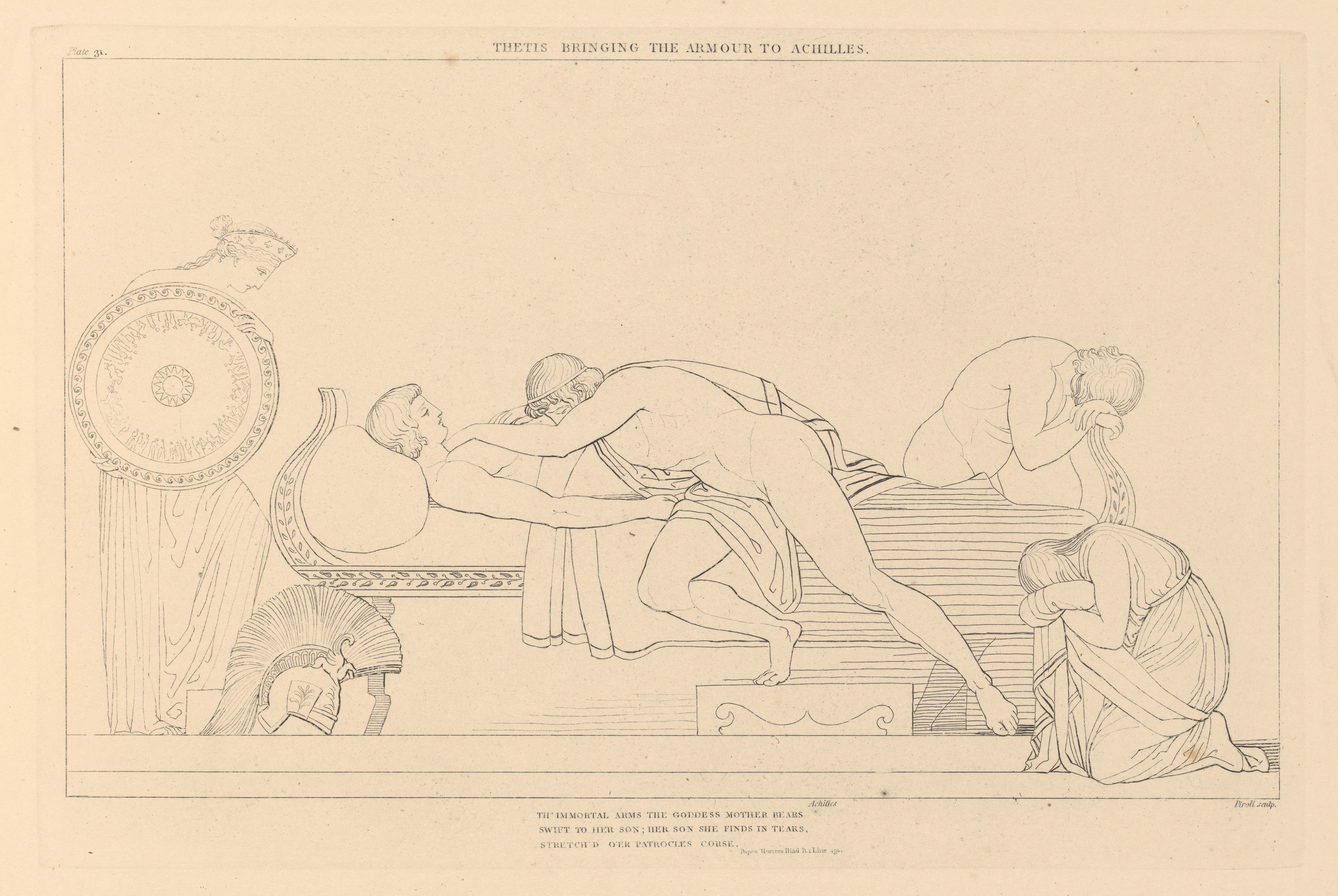
The Iliad of Homer Engraved From the Compositions of John Flaxman, R.A., Sculptor

Odysseus, who spent 7 years imprisonment under today Calypso’s nymph became our reality because the aesthetics of good, beautiful, open has been transformed by an invisible entity through an invisible hand into an expression that has as intend destruction and nothingness.

The expression of its behavior lies introspectively in the way of showing its own unhappiness.

The lack of its aesthetics is expressed in behavior that searches for destruction rather than preservation.

Art was universal until it became a tool into the hands of a few who brought their way of seeing the world through destructive control.

Control of those who are weak as a way of preserving their own ugliness as opposed to those who want to become their own masters.

It is that kind of intrusive relationship that makes it impossible for those who have a belief in the art of beauty which is represented through freedom to be knelt by several letters.

Letters are made for writing poems and poetry that enrich us rather than destroying our insights.

Will we come out of this ugliness as one that understands the differences or as those who still, believe that changes are the result of the continuous fight for freedom of positive expression?


"The Iliad of Homer Engraved From the Compositions of John Flaxman, R.A., Sculptor" by John Flaxman is licensed under CC0 1.0

Continue reading
  2783 Hits
Cron Job Starts